


<div align="center"><p> <a href="https://github.com/neovim/neovim"><img src="https://img.shields.io/badge/Neovim-0.9.0-blueviolet.svg?style=flat-square&logo=Neovim&color=90E59A&logoColor=white" alt="Neovim"/></a> <a href="https://github.com/doctorfree/nvim-lazyman/pulse"><img src="https://img.shields.io/github/last-commit/doctorfree/nvim-lazyman" alt="Last commit"/></a> <a href="https://github.com/doctorfree/nvim-lazyman/pulse"><img src="https://img.shields.io/github/commit-activity/t/doctorfree/nvim-lazyman" alt="Github commit activity"/></a> <a href="https://github.com/doctorfree/nvim-lazyman/issues"><img src="https://img.shields.io/github/issues/doctorfree/nvim-lazyman.svg?style=flat-square&label=Issues&color=F05F40" alt="Github issues"/></a> <a href="https://github.com/doctorfree/nvim-lazyman/actions/workflows/docker.yml"><img src="https://github.com/doctorfree/nvim-lazyman/actions/workflows/docker.yml/badge.svg" alt="CI Status"/></a> <a href="https://github.com/doctorfree/nvim-lazyman/blob/main/LICENSE"><img src="https://img.shields.io/github/license/doctorfree/nvim-lazyman?style=flat-square&logo=MIT&label=License" alt="License"/></a> </p># Install lazyman with the following two commands: git clone https://github.com/doctorfree/nvim-lazyman $HOME/.config/nvim-Lazyman $HOME/.config/nvim-Lazyman/lazyman.sh
NEWS! Lazyman is now available as a Kasm Workspace
by adding https://doctorfree.github.io/kasm-registry/ as a
Kasm 3rd party registry
and installing the Neovim or Deluxe workspace in your Kasm instance.
The Lazyman Neovim configuration management menu:
<p float="center"> <img src="https://raw.githubusercontent.com/wiki/doctorfree/nvim-lazyman/screenshots/lazymenu.png" style="width:877px;height:525px;"> </p>The nvims Neovim configuration fuzzy selector:
<p float="center"> <img src="https://raw.githubusercontent.com/wiki/doctorfree/nvim-lazyman/screenshots/nvims.png" style="width:250px;height:350px;"> <img src="https://raw.githubusercontent.com/wiki/doctorfree/nvim-lazyman/screenshots/nvims2.png" style="width:250px;height:240px;"> </p> </div>The Lazyman project can be used to install, initialize, and manage multiple Neovim configurations. Over 100 popular Neovim configurations are supported.
See what's new
Follow the Installation instructions to bootstrap Lazyman.
Once Lazyman is installed, execute the lazyman command to manage
Neovim configurations. The lazyman command is located in ~/.local/bin/lazyman.
The two primary features of the Lazyman project are the lazyman command
and the nvims shell function. The lazyman command provides a menu
interface and command line options to install, initialize, and manage
multiple Neovim configurations. The nvims shell function dynamically
generates a fuzzy searchable menu of Neovim configurations from which
to select. The selected configurations can be opened in Neovim, removed,
or a configuration information document can be viewed.
More info on the nvims and neovides shell functions can be found below
in the nvims fuzzy selector section, in the
nvims man page with man nvims, with the command nvims -U, or in Neovim
using the nvim-Lazyman configuration with :h Nvims.
The lazyman command separates Neovim configurations into 5 categories:
Base, Language, Personal, Starter, and Custom. The Base category
consists of well tested Neovim configurations and distributions, all of which
provide significant value. The Language category includes Neovim configurations
tailored for a specific programming or document format language. The Personal
category includes personal Neovim configurations that provide significant value
or demonstrate some cool features. Configurations in the Personal category are
not necessarily intended for public use, these repositories are maintained for
the personal use of the authors but are included here for their value.
The Starter category includes Neovim configurations tailored to serve as
a starting point for developing your own Neovim configuration. These include
the popular Neovim Kickstart configuration, a Modern Neovim config, the
PDE personal development environment config, and the Neovim configurations
provided by the nvim-starter project.
The Custom category includes any additional Neovim configurations installed
and initialized with lazyman by the end-user using the -C url and
-N nvimdir options.
In addition, Lazyman installs and initializes the Lazyman Neovim configuration, a richly configured Neovim environment using Lua, Lazy, and Mason to support highlighting, completion, diagnostics, and more for many programming languages.
The installation and initialization of Neovim configurations are placed in
separate directories and managed using the NVIM_APPNAME environment variable.
Note that a full installation and initialization of all supported Neovim configurations, plugins, language servers, formatters, linters, and tools will consume over 20GB of disk space.
The lazyman command is installed as ~/.local/bin/lazyman and can be used
to install, initialize, remove, and manage multiple Neovim configurations.
Table of Contents
- Requirements
- Installation
- Supported configurations
- Features
- Usage
- Motivation
- Notes
- Removal
- Known limitations and troubleshooting
- Appendix
Requirements
The lazyman Neovim configuration manager requires Neovim 0.9. The lazyman
installation and initialization process checks for Neovim 0.9 and, if not
found, installs it and required dependencies and tools.
Lazyman requires Linux or macOS, git, and the Bash shell version 4 or later.
- Unix/Linux/macOS
- Neovim 0.9 (automatically installed if not found)
- Bash version 4 or later (automatically installed if not found)
- Git version 2 or later
Note: CentOS 7 users should upgrade git and macOS users upgrade bash.
To enable installation of language servers and treesitter syntax highlighting
gcc, node, and npm are required. For example, to install these
requirements on Ubuntu Linux:
sudo apt install build-essential
sudo apt install nodejs
sudo apt install npm
Github API rate limiting
If you are in a corporate network or large shared network you may encounter rate limiting issues when attempting to access the Github API. To increase your rate limit, create and export a Github personal access token:
export GITHUB_TOKEN=<your-github-token>
macOS users
Even the latest versions of macOS ship with Bash 3.2 which dates from 2007. The Lazyman initialization process will update your system with a modern Bash using Homebrew:
brew install bash
The initialization process also makes sure it is found first in your PATH.
For example, export PATH="/usr/local/bin:${PATH}" or export PATH="/opt/homebrew/bin:${PATH}".
Installation
The Lazyman installation process consists of two steps.
Step 1, clone the Lazyman repository:
git clone https://github.com/doctorfree/nvim-lazyman $HOME/.config/nvim-Lazyman
Step 2, initialize the Lazyman Neovim configuration:
$HOME/.config/nvim-Lazyman/lazyman.sh
These 2 steps perform the following:
- Download the Lazyman Neovim configuration
- Initialize the Lazyman Neovim configuration which:
- Installs language servers and tools for coding diagnostics
- Installs the latest version of Neovim if not already installed
- Installs and initializes configured Neovim plugins
After the download and initialization are complete, execute the lazyman
command found in ~/.local/bin/lazyman.
By default, Lazyman uses the native package manager to install Neovim dependencies and tools. Supported native package managers include:
aptorapt-geton Debian based platforms (e.g. Ubuntu)dnforyumon RPM based platforms (Fedora, CentOS, Red Hat)pacmanon Arch Linux and Arch-Like platformsapkon Alpine Linuxxbps-installon Void Linuxzypperon SUSE Linux
Further details on Lazyman installation including command line options
to direct lazyman to install Neovim, dependencies and tools using
Homebrew or to skip the Neovim installation altogether
can be found on the
Install tab of the Lazyman website
Supported configurations
View details of each supported configuration at the Lazyman website.
Over 100 popular Neovim configurations are supported in the following configuration categories:
<!-- prettier-ignore -->| Base | Configs | |
|---|---|---|
| Abstract | AstroNvimPlus | Basic IDE |
| Ecovim | LazyVim | LunarVim |
| MagicVim | NvChad | SpaceVim |
| Language | Configs | |||||
|---|---|---|---|---|---|---|
| AlanVim | Allaman | CatNvim | Cpp | Go | Go2one | Insis |
| Knvim | LaTeX | LazyIde | LunarIde | LvimIde | Magidc | Nv |
| NV-IDE | Orange | Python | Rust | SaleVim | Shuvro | Webdev |
| Starter | Configs | |||
|---|---|---|---|---|
| AstroNvimStart | Barebones | Basic | CodeArt | CosmicNvim |
| Ember | Fennel | HardHacker |
编辑推荐精选
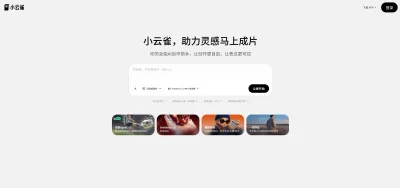

小云雀
字节旗下AI内容创作Agent
小云雀是字节跳动旗下剪映团队推出的AI内容创作Agent,主打”一句话打造一个爆款”的零门槛创作体验。用户只需输入一句指令,可自动生成15-60秒短视频、数字人口播视频、风格化海报等内容,支持200+可商用数字人形象和19种语言及方言。小云雀核心功能包括智能成片、AI设计、照片会说话、爆款复刻等,已接入豆包大模型、DeepSeek Chat及自研Seedance 2.0视频生成模型、Seedream 5.0图像生成模型。目前支持安卓APP和网页版,每日登录可领取120积分。适合自媒体创作者、电商营销人员、教育工作者及普通用户使用,近期因用户量激增,视频生成排队时长可达8小时。


豆包
字节跳动旗下 AI 智能助手
字节跳动旗下 AI 智能助手
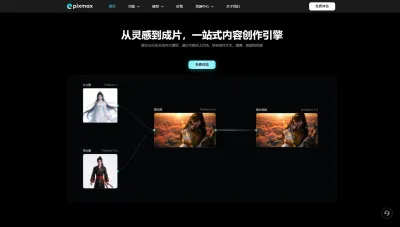

Pixmax
一站式AI短剧创作平台
Pixmax专注打造下一代“ AI 视觉创作引擎”,整合行业顶尖 AI 大模型、工工业级精准控制及企业级协同管理功能,是全方位的 AI 内容创作平台。

GPT Plus|Pro充值
GPT充值
支持 ChatGPT Plus / Pro 充值服务,支付便捷,自动发货,售后可查。
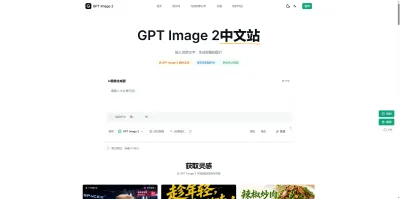

GPT Image 2中文站
AI 图片生成平台
GPT Image 2 是面向用户的 AI 图片生成平台,支持文生图、图生图及多模型创意工作流。

Vecbase
你的AI Agent团队
Vecbase 是专为 AI 团队打造的智能工作空间,将数据管理、模型协作与知识沉淀整合于一处。算法、产品与业务在同一平台无缝协同,让从数据到 AI 应用的落地更快一步。


音述AI
全球首个AI音乐社区
音述AI是全球首个AI音乐社区,致力让每个人都能用音乐表达自我。音述AI提供零门槛AI创作工具,独创GETI法则帮助用户精准定义音乐风格,AI润色功能支持自动优化作品质感。音述AI支持交流讨论、二次创作与价值变现。针对中文用户的语言习惯与文化背景进行专门优化,支持国风融合、C-pop等本土音乐标签,让技术更好地承载人文表达。

QoderWork
阿里Qoder团队推出的桌面端AI智能体
QoderWork 是阿里推出的本地优先桌面 AI 智能体,适配 macOS14+/Windows10+,以自然语言交互实现文件管理、数据分析、AI 视觉生成、浏览器自动化等办公任务,自主拆解执行复杂工作流,数据本地运行零上传,技能市场可无限扩展,是高效的 Agentic 生产力办公助手。


lynote.ai
一站式搞定所有学习需求
不再被海量信息淹没,开始真正理解知识。Lynote 可摘要 YouTube 视频、PDF、文章等内容。即时创建笔记,检测 AI 内容并下载资料,将您的学习效率提升 10 倍。


AniShort
为AI短剧协作而生
专为AI短剧协作而生的AniShort正式发布,深度重构AI短剧全流程生产模式,整合创意策划、制作执行、实时协作、在线审片、资产复用等全链路功能,独创无限画布、双轨并行工业化工作流与Ani智能体助手,集成多款主流AI大模型,破解素材零散、版本混乱、沟通低效等行业痛点,助力3人团队效率提升800%,打造标准化、可追溯的AI短剧量产体系,是AI短剧团队协同创作、提升制作效率的核心工具。

推荐工具精选


AI云服务特惠
懂AI专属折扣关注微信公众号
最新AI工具、AI资讯
独家AI资源、AI项目落地

微信扫一扫关注公众号