


MultiWOZ
Multi-Domain Wizard-of-Oz dataset (MultiWOZ), a fully-labeled collection of human-human written conversations spanning over multiple domains and topics. At a size of 10k dialogues, it is at least one order of magnitude larger than all previous annotated task-oriented corpora.
Versions
- The newest, corrected version of the dataset is available at MultiWOZ_2.2 thanks to the Google crew.
- The new, corrected version of the dataset is available at MultiWOZ_2.1 thanks to the Amazon crew.
- The dataset used in the EMNLP publication can be accessed at: MultiWOZ_2.0
- The dataset used in the ACL publication can be accessed at: MultiWOZ_1.0
Dataset access
These datasets can be directly loaded through DialogStudio.
Data structure
There are 3,406 single-domain dialogues that include booking if the domain allows for that and 7,032 multi-domain dialogues consisting of at least 2 up to 5 domains. To enforce reproducibility of results, the corpus was randomly split into a train, test and development set. The test and development sets contain 1k examples each. Even though all dialogues are coherent, some of them were not finished in terms of task description. Therefore, the validation and test sets only contain fully successful dialogues thus enabling a fair comparison of models. There are no dialogues from hospital and police domains in validation and testing sets.
Each dialogue consists of a goal, multiple user and system utterances as well as a belief state. Additionally, the task description in natural language presented to turkers working from the visitor’s side is added. Dialogues with MUL in the name refers to multi-domain dialogues. Dialogues with SNG refers to single-domain dialogues (but a booking sub-domain is possible). The booking might not have been possible to complete if fail_book option is not empty in goal specifications – turkers did not know about that.
The belief state have three sections: semi, book and booked. Semi refers to slots from a particular domain. Book refers to booking slots for a particular domain and booked is a sub-list of book dictionary with information about the booked entity (once the booking has been made). The goal sometimes was wrongly followed by the turkers which may results in the wrong belief state. The joint accuracy metrics includes ALL slots.
:grey_question: FAQ
- File names refer to two types of dialogues. The
MULandPMULnames refer to strictly multi domain dialogues (at least 2 main domains are involved) while theSNG,SSNGandWOZnames refer to single domain dialogues with potentially sub-domains like booking. - Only system utterances are manually annotated with dialogue acts – there are no human annotations from the user side. But MultiWOZ 2.1 automatically annotated user dialogue acts via heuristics developed in ConvLab.
- There is no 1-to-1 mapping between dialogue acts and sentences.
- There is no dialogue state tracking labels for police and hospital as these domains are very simple. However, there are no dialogues with these domains in validation and testing sets either.
:trophy: Benchmarks
If you want to update benchmarks table with new results, please create a pull request to incorporate the new model.
Dialog State Tracking
:bangbang: For the DST experiments please follow the data processing and scoring scripts from the TRADE model.
<div class="datagrid" style="width:500px;"> <table> <thead><tr><th></th><th colspan="2">MultiWOZ 2.0</th><th colspan="2">MultiWOZ 2.1</th><th colspan="2">MultiWOZ 2.2</th></tr></thead> <thead><tr><th>Model</th><th>Joint Accuracy</th><th>Slot</th><th>Joint Accuracy</th><th>Slot</th><th>Joint Accuracy</th><th>Slot</th></tr></thead> <tbody> <tr><td><a href="https://www.aclweb.org/anthology/P18-2069">MDBT</a> (Ramadan et al., 2018) </td><td>15.57 </td><td>89.53</td><td></td><td></td><td></td><td></td></tr> <tr><td><a href="https://arxiv.org/abs/1805.09655">GLAD</a> (Zhong et al., 2018)</td><td>35.57</td><td>95.44 </td><td></td><td></td><td></td><td></td></tr> <tr><td><a href="https://arxiv.org/pdf/1812.00899.pdf">GCE</a> (Nouri and Hosseini-Asl, 2018)</td><td>36.27</td><td>98.42</td><td></td><td></td><td></td><td></td></tr> <tr><td><a href="https://arxiv.org/pdf/1908.01946.pdf">Neural Reading</a> (Gao et al, 2019)</td><td>41.10</td><td></td><td></td><td></td><td></td><td></td></tr> <tr><td><a href="https://arxiv.org/pdf/1907.00883.pdf">HyST</a> (Goel et al, 2019)</td><td>44.24</td><td></td><td></td><td></td> <td></td><td></td></tr> <tr><td><a href="https://www.aclweb.org/anthology/P19-1546/">SUMBT</a> (Lee et al, 2019)</td><td>46.65</td><td>96.44</td><td></td><td></td><td></td><td></td></tr> <tr><td><a href="https://arxiv.org/pdf/1909.05855.pdf">SGD-baseline</a> (Rastogi et al, 2019)</td><td></td><td></td><td>43.4</td><td></td><td>42.0</td><td></td></tr> <tr><td><a href="https://arxiv.org/pdf/1905.08743.pdf">TRADE</a> (Wu et al, 2019)</td><td>48.62</td><td>96.92</td><td>46.0</td><td></td><td>45.4</td><td></td></tr> <tr><td><a href="https://arxiv.org/pdf/1909.00754.pdf">COMER</a> (Ren et al, 2019)</td><td>48.79</td><td></td><td></td><td></td<td></td><td></td><td></td></tr> <tr><td><a href="https://www.aclweb.org/anthology/2020.acl-main.636.pdf">MERET</a> (Huang et al, 2020)</td><td>50.91</td><td>97.07</td><td></td><td></td<td></td><td></td><td></td></tr> <tr><td><a href="https://arxiv.org/pdf/2203.08568.pdf">In-Context Learning (Codex)</a> (Hu et al. 2022)</td><td></td><td></td><td>50.65<td></td><td></td><td></td></tr> <tr><td><a href="https://arxiv.org/pdf/1911.06192.pdf">DSTQA</a> (Zhou et al, 2019)</td><td>51.44</td><td>97.24</td><td>51.17</td><td>97.21</td><td></td><td></td></tr> <tr><td><a href="https://arxiv.org/pdf/2009.10447.pdf">SUMBT+LaRL</a> (Lee et al. 2020)</td><td>51.52</td><td>97.89</td><td> </td><td> </td><td> </td><td> </td></tr> <tr><td><a href="https://arxiv.org/pdf/1910.03544.pdf">DS-DST</a> (Zhang et al, 2019)</td><td></td><td></td><td>51.2</td><td></td><td>51.7</td><td></td></tr> <tr><td><a href="https://arxiv.org/pdf/2009.08115.pdf">LABES-S2S</a> (Zhang et al, 2020)</td><td></td><td></td><td>51.45</td><td></td><td></td><td></td></tr> <tr><td><a href="https://arxiv.org/pdf/1910.03544.pdf">DST-Picklist</a> (Zhang et al, 2019)</td><td>54.39</td><td></td><td>53.3</td><td></td><td></td><td></td></tr> <tr><td><a href="https://arxiv.org/pdf/2009.12005.pdf">MinTL-BART</a> (Lin et al, 2020)</td><td>52.10</td><td></td><td>53.62</td><td></td><td></td><td></td></tr> <tr><td><a href="https://www.aaai.org/Papers/AAAI/2020GB/AAAI-ChenL.10030.pdf">SST</a> (Chen et al. 2020)</td><td></td><td></td><td>55.23</td><td></td><td></td><td></td></tr> <tr><td><a href="https://arxiv.org/abs/2005.02877">TripPy</a> (Heck et al. 2020)</td><td></td><td></td><td>55.3</td><td></td><td></td><td></td></tr> <tr><td><a href="https://arxiv.org/pdf/2005.00796.pdf">SimpleTOD</a> (Hosseini-Asl et al. 2020)</td><td></td><td></td><td>56.45</td><td></td><td></td><td></td></tr> <tr><td><a href="https://arxiv.org/pdf/2109.14739.pdf">PPTOD</a> (Su et al. 2021)</td><td>53.89</td><td></td><td>57.45</td><td></td><td></td><td></td></tr> <tr><td><a href="https://arxiv.org/pdf/2009.13570.pdf">ConvBERT-DG + Multi</a> (Mehri et al. 2020)</td><td></td><td></td><td>58.7</td><td></td><td></td><td></td></tr> <tr><td><a href="https://arxiv.org/abs/2112.08321">PrefineDST</a> (Cho et al. 2021)</td><td></td><td></td><td>58.9* (53.8)</td><td></td><td></td><td></td></tr> <tr><td><a href="https://aclanthology.org/2022.coling-1.46/">SPACE-2</a> (He et al. 2022)</td><td></td><td></td><td>59.51</td><td></td><td></td><td></td></tr> <tr><td><a href="https://openreview.net/forum?id=oyZxhRI2RiE">TripPy + SCoRe</a> (Yu et al. 2021)</td><td></td><td></td><td>60.48</td><td></td><td></td><td></td></tr> <tr><td><a href="https://arxiv.org/pdf/2010.12850.pdf">TripPy + CoCoAug</a> (Li and Yavuz et al. 2020)</td><td></td><td></td><td>60.53</td><td></td><td></td><td></td></tr> <tr><td><a href="https://arxiv.org/abs/2106.00291">TripPy + SaCLog</a> (Dai et al. 2021)</td><td></td><td></td><td>60.61</td><td></td><td></td><td></td></tr> <tr><td><a href="https://aclanthology.org/2021.emnlp-main.620.pdf">KAGE-GPT2</a> (Lin et al, 2021)</td><td>54.86</td><td>97.47</td><td></td><td></td><td></td><td></td></tr> <tr><td><a href="https://aclanthology.org/2021.nlp4convai-1.8/">AG-DST</a> (Tian et al. 2021)</td><td></td><td></td><td></td><td></td><td>57.26</td><td></td></tr> <tr><td><a href="https://arxiv.org/abs/2209.06664">SPACE-3</a> (He et al. 2022)</td><td></td><td></td><td></td><td></td><td>57.50</td><td></td></tr> <tr><td><a href="https://aclanthology.org/2021.emnlp-main.404.pdf">SDP-DST</a> (Lee et al. 2021)</td><td></td><td></td><td>56.66<td></td><td>57.60</td><td></td></tr> <tr><td><a href="https://arxiv.org/pdf/2201.08904.pdf">D3ST</a> (Zhao et al. 2022)</td><td></td><td></td><td>57.80<td></td><td>58.70</td><td></td></tr> <tr><td><a href="https://arxiv.org/pdf/2110.11205v3.pdf">DAIR</a> (Huang et al. 2022)</td><td></td><td></td><td></td><td></td><td>59.98</td><td></td></tr> <tr><td><a href="https://arxiv.org/pdf/2305.02468.pdf">TOATOD</a> (Bang et al. 2023)</td><td></td><td></td><td>54.97</td><td></td><td>63.79</td><td></td></tr> </tbody> </table>Note: *SimpleTOD's evaluation setting does not distinguish between dontcare and none slot values, which results in an inflated JGA. Results when this discrepancy is resolved are shown in parantheses. Refer more details to the CheckDST github for a corrected evaluation script: https://github.com/wise-east/checkdst.
Response Generation
:bangbang: For the response generation evaluation please see and use the scoring scripts from this repository.
- See this directory for details about the raw generated predictions of other models.
- Inform meaures whether the system provides an appropriate entity and Success measures whether the system answers all the requested attributes.
- BLEU reported in these tables is calculated with references obtained from the MultiWOZ 2.2 span annotations.
- CBE stands for conditional bigram entropy.
| Model | BLEU | Inform | Success | Av. len. | CBE | #uniq. words | #uniq. 3-grams |
|---|---|---|---|---|---|---|---|
| Reference corpus | - | 93.7 | 90.9 | 14.00 | 3.01 | 1407 | 23877 |
End-to-end models, i.e. those that use only the dialogue context as input to generate responses.
Combined Score = (INFORM + SUCCESS)*0.5 + BLEU
| Model | BLEU | Inform | Success | Combined Score | Av. len. | CBE | #uniq. words | #uniq. 3-grams |
|---|---|---|---|---|---|---|---|---|
| LABES |
编辑推荐精选


扣子-AI办公
职场AI,就用扣子
AI办公助手,复杂任务高效处理。办公效率低?扣子空间AI助手支持播客生成、PPT制作、网页开发及报告写作,覆盖科研、商业、舆情等领域的专家Agent 7x24小时响应,生活工作无缝切换,提升50%效率!


堆友
多风格AI绘画神器
堆友平台由阿里巴巴设计团队创建,作为一款AI驱动的设计工具,专为设计师提供一站式增长服务。功能覆盖海量3D素材、AI绘画、实时渲染以及专业抠图,显著提升设计品质和效率。平台不仅提供工具,还是一个促进创意交流和个人发展的空间,界面友好,适合所有级别的设计师和创意工作者。


码上飞
零代码AI应用开发平台
零代码AI应用开发平台,用户只需一句话简单描述需求,AI能自动生成小程序、APP或H5网页应用,无需编写代码。
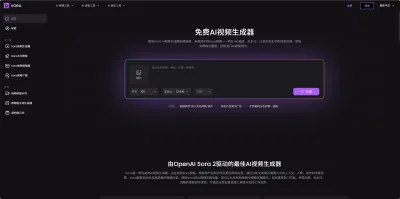

Vora
免费创建高清无水印Sora视频
Vora是一个免费创建高清无水印Sora视频的AI工具


Refly.AI
最适合小白的AI自动化工作流平台
无需编码,轻松生成可复用、可变现的AI自动化工作流


酷表ChatExcel
大模型驱动的Excel数据处理工具
基于大模型交互的表格处理系统,允许用户通过对话方式完成数据整理和可视化分析。系统采用机器学习算法解析用户指令,自动执行排序、公式计算和数据透视等操作,支持多种文件格式导入导出。数据处理响应速度保持在0.8秒以内,支持超过100万行数据的即时分析。


TRAE编程
AI辅助编程,代码自动修复
Trae是一种自适应的集成开发环境(IDE),通过自动化和多元协作改变开发流程。利用Trae,团队能够更快速、精确地编写和部署代码,从而提高编程效率和项目交付速度。Trae具备上下文感知和代码自动完成功能,是提升开发效率的理想工具。
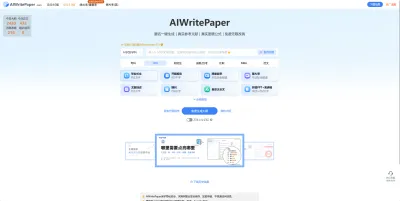

AIWritePaper论文写作
AI论文写作指导平台
AIWritePaper论文写作是一站式AI论文写作辅助工具,简化了选题、文献检索至论文撰写的整个过程。通过简单设定,平台可快速生成高质量论文大纲和全文,配合图表、参考文献等一应俱全,同时提供开题报告和答辩PPT等增值服务,保障数据安全,有效提升写作效率和论文质量。


博思AIPPT
AI一键生成PPT,就用博思AIPPT!
博思AIPPT,新一代的AI生成PPT平台,支持智能生成PPT、AI美化PPT、文本&链接生成PPT、导入Word/PDF/Markdown文档生成PPT等,内置海量精美PPT模板,涵盖商务、教育、科技等不同风格,同时针对每个页面提供多种版式,一键自适应切换,完美适配各种办公场景。


潮际好麦
AI赋能电商视觉革命,一站式智能商拍平台
潮际好麦深耕服装行业,是国内AI试衣效果最好的软件。使用先进AIGC能力为电商卖家批量提供优质的、低成本的商拍图。合作品牌有Shein、Lazada、安踏、百丽等65个国内外头部品牌,以及国内10万+淘宝、天猫、京东等主流平台的品牌商家,为卖家节省将近85%的出图成本,提升约3倍出图效率,让品牌能够快速上架。

推荐工具精选


AI云服务特惠
懂AI专属折扣关注微信公众号
最新AI工具、AI资讯
独家AI资源、AI项目落地

微信扫一扫关注公众号