

















Nature-inspired algorithms are a very popular tool for solving optimization problems. Numerous variants of nature-inspired algorithms have been developed (paper 1, paper 2) since the beginning of their era. To prove their versatility, those were tested in various domains on various applications, especially when they are hybridized, modified or adapted. However, implementation of nature-inspired algorithms is sometimes a difficult, complex and tedious task. In order to break this wall, NiaPy is intended for simple and quick use, without spending time for implementing algorithms from scratch.
- Free software: MIT license
- Documentation: https://niapy.readthedocs.io/en/stable/
- Python versions: 3.9.x, 3.10.x, 3.11.x, 3.12.x
- Dependencies: click here
Mission
Our mission is to build a collection of nature-inspired algorithms and create a simple interface for managing the optimization process. NiaPy offers:
- numerous optimization problem implementations,
- use of various nature-inspired algorithms without struggle and effort with a simple interface,
- easy comparison between nature-inspired algorithms, and
- export of results in various formats such as Pandas DataFrame, JSON or even Excel.
Installation
Install NiaPy with pip:
pip install niapy
To install NiaPy with conda, use:
conda install -c niaorg niapy
To install NiaPy on Fedora, use:
dnf install python3-niapy
To install NiaPy on Arch Linux, please use an AUR helper:
yay -Syyu python-niapy
To install NiaPy on Alpine Linux, please enable Community repository and use:
apk add py3-niapy
To install NiaPy on NixOS, please use:
nix-env -iA nixos.python310Packages.niapy
To install NiaPy on Void Linux, use:
xbps-install -S python3-niapy
Install from source
In case you want to install directly from the source code, use:
pip install git+https://github.com/NiaOrg/NiaPy.git
Algorithms
Click here for the list of implemented algorithms.
Problems
Click here for the list of implemented test problems.
Usage
After installation, you can import NiaPy as any other Python module:
$ python
>>> import niapy
>>> niapy.__version__
Let's go through a basic and advanced example.
Basic Example
Let’s say, we want to try out PSO against the Pintér problem function. Firstly, we have to create new file, with name, for example basic_example.py. Then we have to import chosen algorithm from NiaPy, so we can use it. Afterwards we initialize ParticleSwarmAlgorithm class instance and run the algorithm. Given bellow is the complete source code of basic example.
from niapy.algorithms.basic import ParticleSwarmAlgorithm
from niapy.task import Task

# we will run 10 repetitions of Weighted, velocity clamped PSO on the Pinter problem
for i in range(10):
    task = Task(problem='pinter', dimension=10, max_evals=10000)
    algorithm = ParticleSwarmAlgorithm(population_size=100, w=0.9, c1=0.5, c2=0.3, min_velocity=-1, max_velocity=1)
    best_x, best_fit = algorithm.run(task)
    print(best_fit)
Given example can be run with python basic_example.py command and should give you similar output as following:
0.008773534890863646
0.036616190934621755
186.75116812592546
0.024186452828927896
263.5697469837348
45.420706924365916
0.6946753611091367
7.756100204780568
5.839673314425907
0.06732518679742806
Advanced Example
In this example we will show you how to implement a custom problem class and use it with any of implemented algorithms. First let's create new file named advanced_example.py. As in the previous examples we wil import algorithm we want to use from niapy module.
For our custom optimization function, we have to create new class. Let's name it MyProblem. In the initialization method of MyProblem class we have to set the dimension, lower and upper bounds of the problem. Afterwards we have to override the abstract method _evaluate which takes a parameter x, the solution to be evaluated, and returns the function value. Now we should have something similar as is shown in code snippet bellow.
import numpy as np
from niapy.task import Task
from niapy.problems import Problem
from niapy.algorithms.basic import ParticleSwarmAlgorithm


# our custom problem class
class MyProblem(Problem):
    def __init__(self, dimension, lower=-10, upper=10, *args, **kwargs):
        super().__init__(dimension, lower, upper, *args, **kwargs)

    def _evaluate(self, x):
        return np.sum(x ** 2)
Now, all we have to do is to initialize our algorithm as in previous examples and pass an instance of our MyProblem class as the problem argument.
my_problem = MyProblem(dimension=20)
for i in range(10):
    task = Task(problem=my_problem, max_iters=100)
    algo = ParticleSwarmAlgorithm(population_size=100, w=0.9, c1=0.5, c2=0.3, min_velocity=-1, max_velocity=1)

    # running algorithm returns best found minimum
    best_x, best_fit = algo.run(task)
    # printing best minimum
    print(best_fit)
Now we can run our advanced example with following command: python advanced_example.py. The results should be similar to those bellow.
0.002455614050761476
0.000557652972392164
0.0029791325679865413
0.0009443595274525336
0.001012658824492069
0.0006837236892816072
0.0026789725774685495
0.005017746993004601
0.0011654473402322196
0.0019074442166293853
For more usage examples please look at examples folder.
More advanced examples can also be found in the NiaPy-examples repository.
Cite us
Are you using NiaPy in your project or research? Please cite us!
Plain format
      Vrbančič, G., Brezočnik, L., Mlakar, U., Fister, D., & Fister Jr., I. (2018).
      NiaPy: Python microframework for building nature-inspired algorithms.
      Journal of Open Source Software, 3(23), 613\. <https://doi.org/10.21105/joss.00613>
Bibtex format
    @article{NiaPyJOSS2018,
        author  = {Vrban{\v{c}}i{\v{c}}, Grega and Brezo{\v{c}}nik, Lucija
                  and Mlakar, Uro{\v{s}} and Fister, Du{\v{s}}an and {Fister Jr.}, Iztok},
        title   = {{NiaPy: Python microframework for building nature-inspired algorithms}},
        journal = {{Journal of Open Source Software}},
        year    = {2018},
        volume  = {3},
        issue   = {23},
        issn    = {2475-9066},
        doi     = {10.21105/joss.00613},
        url     = {https://doi.org/10.21105/joss.00613}
    }
RIS format
    TY  - JOUR
    T1  - NiaPy: Python microframework for building nature-inspired algorithms
    AU  - Vrbančič, Grega
    AU  - Brezočnik, Lucija
    AU  - Mlakar, Uroš
    AU  - Fister, Dušan
    AU  - Fister Jr., Iztok
    PY  - 2018
    JF  - Journal of Open Source Software
    VL  - 3
    IS  - 23
    DO  - 10.21105/joss.00613
    UR  - http://joss.theoj.org/papers/10.21105/joss.00613
Contributors ✨
Thanks goes to these wonderful people (emoji key):
<!-- ALL-CONTRIBUTORS-LIST:START - Do not remove or modify this section --> <!-- prettier-ignore-start --> <!-- markdownlint-disable --> <table> <tr> <td align="center"><a href="https://github.com/GregaVrbancic"><img src="https://avatars0.githubusercontent.com/u/1894788?v=4?s=100" width="100px;" alt=""/><br /><sub><b>Grega Vrbančič</b></sub></a><br /><a href="https://github.com/NiaOrg/NiaPy/commits?author=GregaVrbancic" title="Code">💻</a> <a href="https://github.com/NiaOrg/NiaPy/commits?author=GregaVrbancic" title="Documentation">📖</a> <a href="https://github.com/NiaOrg/NiaPy/issues?q=author%3AGregaVrbancic" title="Bug reports">🐛</a> <a href="#example-GregaVrbancic" title="Examples">💡</a> <a href="#maintenance-GregaVrbancic" title="Maintenance">🚧</a> <a href="#platform-GregaVrbancic" title="Packaging/porting to new platform">📦</a> <a href="#projectManagement-GregaVrbancic" title="Project Management">📆</a> <a href="https://github.com/NiaOrg/NiaPy/pulls?q=is%3Apr+reviewed-by%3AGregaVrbancic" title="Reviewed Pull Requests">👀</a></td> <td align="center"><a href="https://github.com/firefly-cpp"><img src="https://avatars2.githubusercontent.com/u/1633361?v=4?s=100" width="100px;" alt=""/><br /><sub><b>firefly-cpp</b></sub></a><br /><a href="https://github.com/NiaOrg/NiaPy/commits?author=firefly-cpp" title="Code">💻</a> <a href="https://github.com/NiaOrg/NiaPy/commits?author=firefly-cpp" title="Documentation">📖</a> <a href="https://github.com/NiaOrg/NiaPy/issues?q=author%3Afirefly-cpp" title="Bug reports">🐛</a> <a href="#example-firefly-cpp" title="Examples">💡</a> <a href="https://github.com/NiaOrg/NiaPy/pulls?q=is%3Apr+reviewed-by%3Afirefly-cpp" title="Reviewed Pull Requests">👀</a> <a href="#question-firefly-cpp" title="Answering Questions">💬</a> <a href="https://github.com/NiaOrg/NiaPy/commits?author=firefly-cpp" title="Tests">⚠️</a> <a href="#platform-firefly-cpp" title="Packaging/porting to new platform">📦</a></td> <td align="center"><a href="https://github.com/lucijabrezocnik"><img src="https://avatars2.githubusercontent.com/u/36370699?v=4?s=100" width="100px;" alt=""/><br /><sub><b>Lucija Brezočnik</b></sub></a><br /><a href="https://github.com/NiaOrg/NiaPy/commits?author=lucijabrezocnik" title="Code">💻</a> <a href="https://github.com/NiaOrg/NiaPy/commits?author=lucijabrezocnik" title="Documentation">📖</a> <a href="https://github.com/NiaOrg/NiaPy/issues?q=author%3Alucijabrezocnik" title="Bug reports">🐛</a> <a href="#example-lucijabrezocnik" title="Examples">💡</a></td> <td align="center"><a href="https://github.com/mlaky88"><img src="https://avatars1.githubusercontent.com/u/23091578?v=4?s=100" width="100px;" alt=""/><br /><sub><b>mlaky88</b></sub></a><br /><a href="https://github.com/NiaOrg/NiaPy/commits?author=mlaky88" title="Code">💻</a> <a href="https://github.com/NiaOrg/NiaPy/commits?author=mlaky88" title="Documentation">📖</a> <a href="#example-mlaky88" title="Examples">💡</a></td> <td align="center"><a href="https://github.com/rhododendrom"><img src="https://avatars1.githubusercontent.com/u/3198785?v=4?s=100" width="100px;" alt=""/><br /><sub><b>rhododendrom</b></sub></a><br /><a href="https://github.com/NiaOrg/NiaPy/commits?author=rhododendrom" title="Code">💻</a> <a href="https://github.com/NiaOrg/NiaPy/commits?author=rhododendrom" title="Documentation">📖</a> <a href="#example-rhododendrom" title="Examples">💡</a> <a href="https://github.com/NiaOrg/NiaPy/issues?q=author%3Arhododendrom" title="Bug reports">🐛</a> <a href="https://github.com/NiaOrg/NiaPy/pulls?q=is%3Apr+reviewed-by%3Arhododendrom" title="Reviewed Pull Requests">👀</a></td> <td align="center"><a href="https://github.com/kb2623"><img src="https://avatars3.githubusercontent.com/u/7480221?s=460&v=4?s=100" width="100px;" alt=""/><br /><sub><b>Klemen</b></sub></a><br /><a编辑推荐精选


音述AI
全球首个AI音乐社区
音述AI是全球首个AI音乐社区,致力让每个人都能用音乐表达自我。音述AI提供零门槛AI创作工具,独创GETI法则帮助用户精准定义音乐风格,AI润色功能支持自动优化作品质感。音述AI支持交流讨论、二次创作与价值变现。针对中文用户的语言习惯与文化背景进行专门优化,支持国风融合、C-pop等本土音乐标签,让技术更好地承载人文表达。


QoderWork
阿里Qoder团队推出的桌面端AI智能体
QoderWork 是阿里推出的本地优先桌面 AI 智能体,适配 macOS14+/Windows10+,以自然语言交互实现文件管理、数据分析、AI 视觉生成、浏览器自动化等办公任务,自主拆解执行复杂工作流,数据本地运行零上传,技能市场可无限扩展,是高效的 Agentic 生产力办公助手。


lynote.ai
一站式搞定所有学习需求
不再被海量信息淹没,开始真正理解知识。Lynote 可摘要 YouTube 视频、PDF、文章等内容。即时创建笔记,检测 AI 内容并下载资料,将您的学习效率提升 10 倍。


AniShort
为AI短剧协作而生
专为AI短剧协作而生的AniShort正式发布,深度重构AI短剧全流程生产模式,整合创意策划、制作执行、实时协作、在线审片、资产复用等全链路功能,独创无限画布、双轨并行工业化工作流与Ani智能体助手,集成多款主流AI大模型,破解素材零散、版本混乱、沟通低效等行业痛点,助力3人团队效率提升800%,打造标准化、可追溯的AI短剧量产体系,是AI短剧团队协同创作、提升制作效率的核心工具。


seedancetwo2.0
能听懂你表达的视频模型
Seedance two是基于seedance2.0的中国大模型,支持图像、视频、音频、文本四种模态输入,表达方式更丰富,生成也更可控。


nano-banana纳米香蕉中文站
国内直接访问,限时3折
输入简单文字,生成想要的图片,纳米香蕉中文站基于 Google 模型的 AI 图片生成网站,支持文字生图、图生图。官网价格限时3折活动


扣子-AI办公
职场AI,就用扣子
AI办公助手,复杂任务高效处理。办公效率低?扣子空间AI助手支持播客生成、PPT制作、网页开发及报告写作,覆盖科研、商业、舆情等领域的专家Agent 7x24小时响应,生活工作无缝切换,提升50%效率!


堆友
多风格AI绘画神器
堆友平台由阿里巴巴设计团队创建,作为一款AI驱动的设计工具,专为设计师提供一站式增长服务。功能覆盖海量3D素材、AI绘画、实时渲染以及专业抠图,显著提升设计品质和效率。平台不仅提供工具,还是一个促进创意交流和个人发展的空间,界面友好,适合所有级别的设计师和创意工作者。


码上飞
零代码AI应用开发平台
零代码AI应用开发平台,用户只需一句话简单描述需求,AI能自动生成小程序、APP或H5网页应用,无需编写代码。
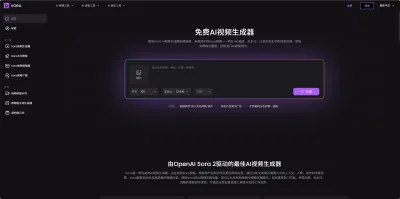

Vora
免费创建高清无水印Sora视频
Vora是一个免费创建高清无水印Sora视频的AI工具

推荐工具精选


AI云服务特惠
懂AI专属折扣关注微信公众号
最新AI工具、AI资讯
独家AI资源、AI项目落地

微信扫一扫关注公众号