


lowdb 

Simple to use type-safe local JSON database 🦉
If you know JavaScript, you know how to use lowdb.
Read or create db.json
const db = await JSONFilePreset('db.json', { posts: [] })
Use plain JavaScript to change data
const post = { id: 1, title: 'lowdb is awesome', views: 100 }

// In two steps
db.data.posts.push(post)
await db.write()

// Or in one
await db.update(({ posts }) => posts.push(post))
// db.json
{
  "posts": [
    { "id": 1, "title": "lowdb is awesome", "views": 100 }
  ]
}
In the same spirit, query using native Array functions:
const { posts } = db.data

posts.at(0) // First post
posts.filter((post) => post.title.includes('lowdb')) // Filter by title
posts.find((post) => post.id === 1) // Find by id
posts.toSorted((a, b) => a.views - b.views) // Sort by views
It's that simple. db.data is just a JavaScript object, no magic.
Sponsors
<br> <br> <p align="center"> <a href="https://mockend.com/" target="_blank"> <img src="https://jsonplaceholder.typicode.com/mockend.svg" height="70px"> </a> </p> <br> <br>Become a sponsor and have your company logo here 👉 GitHub Sponsors
Features
- Lightweight
- Minimalist
- TypeScript
- Plain JavaScript
- Safe atomic writes
- Hackable:
- Change storage, file format (JSON, YAML, ...) or add encryption via adapters
- Extend it with lodash, ramda, ... for super powers!
- Automatically switches to fast in-memory mode during tests
Install
npm install lowdb
Usage
Lowdb is a pure ESM package. If you're having trouble using it in your project, please read this.
import { JSONFilePreset } from 'lowdb/node'

// Read or create db.json
const defaultData = { posts: [] }
const db = await JSONFilePreset('db.json', defaultData)

// Update db.json
await db.update(({ posts }) => posts.push('hello world'))

// Alternatively you can call db.write() explicitely later
// to write to db.json
db.data.posts.push('hello world')
await db.write()
// db.json
{
  "posts": [ "hello world" ]
}
TypeScript
You can use TypeScript to check your data types.
type Data = {
  messages: string[]
}

const defaultData: Data = { messages: [] }
const db = await JSONPreset<Data>('db.json', defaultData)

db.data.messages.push('foo') // ✅ Success
db.data.messages.push(1) // ❌ TypeScript error
Lodash
You can extend lowdb with Lodash (or other libraries). To be able to extend it, we're not using JSONPreset here. Instead, we're using lower components.
import { Low } from 'lowdb'
import { JSONFile } from 'lowdb/node'
import lodash from 'lodash'

type Post = {
  id: number
  title: string
}

type Data = {
  posts: Post[]
}

// Extend Low class with a new `chain` field
class LowWithLodash<T> extends Low<T> {
  chain: lodash.ExpChain<this['data']> = lodash.chain(this).get('data')
}

const defaultData: Data = {
  posts: [],
}
const adapter = new JSONFile<Data>('db.json', defaultData)

const db = new LowWithLodash(adapter)
await db.read()

// Instead of db.data use db.chain to access lodash API
const post = db.chain.get('posts').find({ id: 1 }).value() // Important: value() must be called to execute chain
CLI, Server, Browser and in tests usage
See src/examples/ directory.
API
Presets
Lowdb provides four presets for common cases.
JSONFilePreset(filename, defaultData)JSONFileSyncPreset(filename, defaultData)LocalStoragePreset(name, defaultData)SessionStoragePreset(name, defaultData)
See src/examples/ directory for usage.
Lowdb is extremely flexible, if you need to extend it or modify its behavior, use the classes and adapters below instead of the presets.
Classes
Lowdb has two classes (for asynchronous and synchronous adapters).
new Low(adapter, defaultData)
import { Low } from 'lowdb'
import { JSONFile } from 'lowdb/node'

const db = new Low(new JSONFile('file.json'), {})
await db.read()
await db.write()
new LowSync(adapterSync, defaultData)
import { LowSync } from 'lowdb'
import { JSONFileSync } from 'lowdb/node'

const db = new LowSync(new JSONFileSync('file.json'), {})
db.read()
db.write()
Methods
db.read()
Calls adapter.read() and sets db.data.
Note: JSONFile and JSONFileSync adapters will set db.data to null if file doesn't exist.
db.data // === null
db.read()
db.data // !== null
db.write()
Calls adapter.write(db.data).
db.data = { posts: [] }
db.write() // file.json will be { posts: [] }
db.data = {}
db.write() // file.json will be {}
db.update(fn)
Calls fn() then db.write().
db.update((data) => {
  // make changes to data
  // ...
})
// files.json will be updated
Properties
db.data
Holds your db content. If you're using the adapters coming with lowdb, it can be any type supported by JSON.stringify.
For example:
db.data = 'string'
db.data = [1, 2, 3]
db.data = { key: 'value' }
Adapters
Lowdb adapters
JSONFile JSONFileSync
Adapters for reading and writing JSON files.
import { JSONFile, JSONFileSync } from 'lowdb/node'

new Low(new JSONFile(filename), {})
new LowSync(new JSONFileSync(filename), {})
Memory MemorySync
In-memory adapters. Useful for speeding up unit tests. See src/examples/ directory.
import { Memory, MemorySync } from 'lowdb'

new Low(new Memory(), {})
new LowSync(new MemorySync(), {})
LocalStorage SessionStorage
Synchronous adapter for window.localStorage and window.sessionStorage.
import { LocalStorage, SessionStorage } from 'lowdb/browser'
new LowSync(new LocalStorage(name), {})
new LowSync(new SessionStorage(name), {})
Utility adapters
TextFile TextFileSync
Adapters for reading and writing text. Useful for creating custom adapters.
DataFile DataFileSync
Adapters for easily supporting other data formats or adding behaviors (encrypt, compress...).
import { DataFile } from 'lowdb/node'
new DataFile(filename, {
  parse: YAML.parse,
  stringify: YAML.stringify
})
new DataFile(filename, {
  parse: (data) => { decypt(JSON.parse(data)) },
  stringify: (str) => { encrypt(JSON.stringify(str)) }
})
Third-party adapters
If you've published an adapter for lowdb, feel free to create a PR to add it here.
Writing your own adapter
You may want to create an adapter to write db.data to YAML, XML, encrypt data, a remote storage, ...
An adapter is a simple class that just needs to expose two methods:
class AsyncAdapter {
  read() {
    /* ... */
  } // should return Promise<data>
  write(data) {
    /* ... */
  } // should return Promise<void>
}

class SyncAdapter {
  read() {
    /* ... */
  } // should return data
  write(data) {
    /* ... */
  } // should return nothing
}
For example, let's say you have some async storage and want to create an adapter for it:
import { Low } from 'lowdb'
import { api } from './AsyncStorage'

class CustomAsyncAdapter {
  // Optional: your adapter can take arguments
  constructor(args) {
    // ...
  }

  async read() {
    const data = await api.read()
    return data
  }

  async write(data) {
    await api.write(data)
  }
}

const adapter = new CustomAsyncAdapter()
const db = new Low(adapter, {})
See src/adapters/ for more examples.
Custom serialization
To create an adapter for another format than JSON, you can use TextFile or TextFileSync.
For example:
import { Adapter, Low } from 'lowdb'
import { TextFile } from 'lowdb/node'
import YAML from 'yaml'

class YAMLFile {
  constructor(filename) {
    this.adapter = new TextFile(filename)
  }

  async read() {
    const data = await this.adapter.read()
    if (data === null) {
      return null
    } else {
      return YAML.parse(data)
    }
  }

  write(obj) {
    return this.adapter.write(YAML.stringify(obj))
  }
}

const adapter = new YAMLFile('file.yaml')
const db = new Low(adapter, {})
Limits
Lowdb doesn't support Node's cluster module.
If you have large JavaScript objects (~10-100MB) you may hit some performance issues. This is because whenever you call db.write, the whole db.data is serialized using JSON.stringify and written to storage.
Depending on your use case, this can be fine or not. It can be mitigated by doing batch operations and calling db.write only when you need it.
If you plan to scale, it's highly recommended to use databases like PostgreSQL or MongoDB instead.
编辑推荐精选
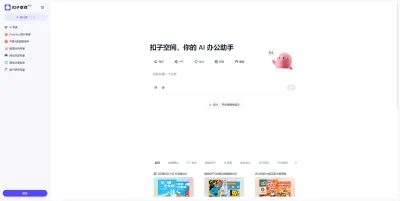

扣子-AI办公
职场AI,就用扣子
AI办公助手,复杂任务高效处理。办公效率低?扣子空间AI助手支持播客生成、PPT制作、网页开发及报告写作,覆盖科研、商业、舆情等领域的专家Agent 7x24小时响应,生活工作无缝切换,提升50%效率!


堆友
多风格AI绘画神器
堆友平台由阿里巴巴设计团队创建,作为一款AI驱动的设计工具,专为设计师提供一站式增长服务。功能覆盖海量3D素材、AI绘画、实时渲染以及专业抠图,显著提升设计品质和效率。平台不仅提供工具,还是一个促进创意交流和个人发展的空间,界面友好,适合所有级别的设计师和创意工作者。


码上飞
零代码AI应用开发平台
零代码AI应用开发平台,用户只需一句话简单描述需求,AI能自动生成小程序、APP或H5网页应用,无需编写代码。
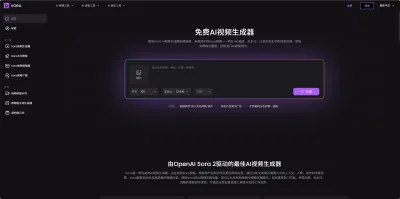

Vora
免费创建高清无水印Sora视频
Vora是一个免费创建高清无水印Sora视频的AI工具


Refly.AI
最适合小白的AI自动化工作流平台
无需编码,轻松生成可复用、可变现的AI自动化工作流


酷表ChatExcel
大模型驱动的Excel数据处理工具
基于大模型交互的表格处理系统,允许用户通过对话方式完成数据整理和可视化分析。系统采用机器学习算法解析用户指令,自动执行排序、公式计算和数据透视等操作,支持多种文件格式导入导出。数据处理响应速度保持在0.8秒以内,支持超过100万行数据的即时分析。
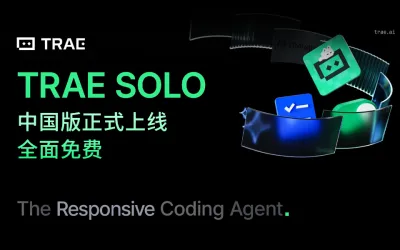

TRAE编程
AI辅助编程,代码自动修复
Trae是一种自适应的集成开发环境(IDE),通过自动化和多元协作改变开发流程。利用Trae,团队能够更快速、精确地编写和部署代码,从而提高编程效率和项目交付速度。Trae具备上下文感知和代码自动完成功能,是提升开发效率的理想工具。
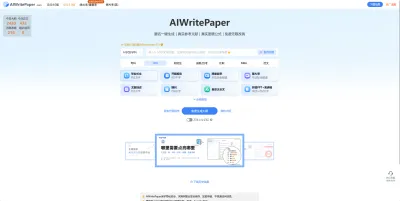

AIWritePaper论文写作
AI论文写作指导平台
AIWritePaper论文写作是一站式AI论文写作辅助工具,简化了选题、文献检索至论文撰写的整个过程。通过简单设定,平台可快速生成高质量论文大纲和全文,配合图表、参考文献等一应俱全,同时提供开题报告和答辩PPT等增值服务,保障数据安全,有效提升写作效率和论文质量。
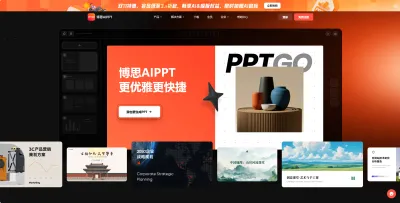

博思AIPPT
AI一键生成PPT,就用博思AIPPT!
博思AIPPT,新一代的AI生成PPT平台,支持智能生成PPT、AI美化PPT、文本&链接生成PPT、导入Word/PDF/Markdown文档生成PPT等,内置海量精美PPT模板,涵盖商务、教育、科技等不同风格,同时针对每个页面提供多种版式,一键自适应切换,完美适配各种办公场景。
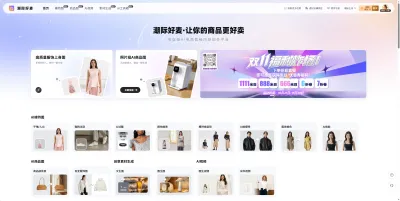

潮际好麦
AI赋能电商视觉革命,一站式智能商拍平台
潮际好麦深耕服装行业,是国内AI试衣效果最好的软件。使用先进AIGC能力为电商卖家批量提供优质的、低成本的商拍图。合作品牌有Shein、Lazada、安踏、百丽等65个国内外头部品牌,以及国内10万+淘宝、天猫、京东等主流平台的品牌商家,为卖家节省将近85%的出图成本,提升约3倍出图效率,让品牌能够快速上架。

推荐工具精选


AI云服务特惠
懂AI专属折扣关注微信公众号
最新AI工具、AI资讯
独家AI资源、AI项目落地

微信扫一扫关注公众号