




Orleans is a cross-platform framework for building robust, scalable distributed applications
Orleans builds on the developer productivity of .NET and brings it to the world of distributed applications, such as cloud services. Orleans scales from a single on-premises server to globally distributed, highly-available applications in the cloud.
Orleans takes familiar concepts like objects, interfaces, async/await, and try/catch and extends them to multi-server environments. As such, it helps developers experienced with single-server applications transition to building resilient, scalable cloud services and other distributed applications. For this reason, Orleans has often been referred to as "Distributed .NET".
It was created by Microsoft Research and introduced the Virtual Actor Model as a novel approach to building a new generation of distributed systems for the Cloud era. The core contribution of Orleans is its programming model which tames the complexity inherent to highly-parallel distributed systems without restricting capabilities or imposing onerous constraints on the developer.
Grains

The fundamental building block in any Orleans application is a grain. Grains are entities comprising user-defined identity, behavior, and state. Grain identities are user-defined keys which make Grains always available for invocation. Grains can be invoked by other grains or by external clients such as Web frontends, via strongly-typed communication interfaces (contracts). Each grain is an instance of a class which implements one or more of these interfaces.
Grains can have volatile and/or persistent state that can be stored in any storage system. As such, grains implicitly partition application state, enabling automatic scalability and simplifying recovery from failures. Grain state is kept in memory while the grain is active, leading to lower latency and less load on data stores.
<p align="center"> <image src="assets/managed_lifecycle.svg" alt="A diagram showing the managed lifecycle of a grain"> </p>Instantiation of grains is automatically performed on demand by the Orleans runtime. Grains which are not used for a while are automatically removed from memory to free up resources. This is possible because of their stable identity, which allows invoking grains whether they are already loaded into memory or not. This also allows for transparent recovery from failure because the caller does not need to know on which server a grain is instantiated on at any point in time. Grains have a managed lifecycle, with the Orleans runtime responsible for activating/deactivating, and placing/locating grains as needed. This allows the developer to write code as if all grains were always in-memory.
Taken together, the stable identity, statefulness, and managed lifecycle of Grains are core factors that make systems built on Orleans scalable, performant, & reliable without forcing developers to write complex distributed systems code.
Example: IoT cloud backend
Consider a cloud backend for an Internet of Things system. This application needs to process incoming device data, filter, aggregate, and process this information, and enable sending commands to devices. In Orleans, it is natural to model each device with a grain which becomes a digital twin of the physical device it corresponds to. These grains keep the latest device data in memory, so that they can be quickly queried and processed without the need to communicate with the physical device directly. By observing streams of time-series data from the device, the grain can detect changes in conditions, such as measurements exceeding a threshold, and trigger an action.
A simple thermostat could be modeled as follows:
public interface IThermostat : IGrainWithStringKey
{
    Task<List<Command>> OnUpdate(ThermostatStatus update);
}
Events arriving from the thermostat from a Web frontend can be sent to its grain by invoking the OnUpdate method which optionally returns a command back to the device.
var thermostat = client.GetGrain<IThermostat>(id);
return await thermostat.OnUpdate(update);
The same thermostat grain can implement a separate interface for control systems to interact with:
public interface IThermostatControl : IGrainWithStringKey
{
    Task<ThermostatStatus> GetStatus();

    Task UpdateConfiguration(ThermostatConfiguration config);
}
These two interfaces (IThermostat and IThermostatControl) are implemented by a single implementation class:
public class ThermostatGrain : Grain, IThermostat, IThermostatControl
{
    private ThermostatStatus _status;
    private List<Command> _commands;

    public Task<List<Command>> OnUpdate(ThermostatStatus status)
    {
        _status = status;
        var result = _commands;
        _commands = new List<Command>();
        return Task.FromResult(result);
    }

    public Task<ThermostatStatus> GetStatus() => Task.FromResult(_status);

    public Task UpdateConfiguration(ThermostatConfiguration config)
    {
        _commands.Add(new ConfigUpdateCommand(config));
        return Task.CompletedTask;
    }
}
The Grain class above does not persist its state. A more thorough example demonstrating state persistence is available in the docs, for more information see Microsoft Orleans: Grain Persistence.
Orleans runtime
The Orleans runtime is what implements the programming model for applications. The main component of the runtime is the silo, which is responsible for hosting grains. Typically, a group of silos run as a cluster for scalability and fault-tolerance. When run as a cluster, silos coordinate with each other to distribute work, detect and recover from failures. The runtime enables grains hosted in the cluster to communicate with each other as if they are within a single process.
In addition to the core programming model, the silo provides grains with a set of runtime services, such as timers, reminders (persistent timers), persistence, transactions, streams, and more. See the features section below for more detail.
Web frontends and other external clients call grains in the cluster using the client library which automatically manages network communication. Clients can also be co-hosted in the same process with silos for simplicity.
Orleans is compatible with .NET Standard 2.0 and above, running on Windows, Linux, and macOS, in full .NET Framework or .NET Core.
Features
Orleans is a feature-rich framework. It provides a set of services that enable the development of distributed systems. The following sections describe the features of Orleans.
Persistence
Orleans provides a simple persistence model which ensures that state is available to a grain before requests are processed and that consistency is maintained. Grains can have multiple named persistent data objects, for example, one called "profile" for a user's profile and one called "inventory" for their inventory. This state can be stored in any storage system. For example, profile data may be stored in one database and inventory in another. While a grain is running, this state is kept in memory so that read requests can be served without accessing storage. When the grain updates its state, a state.WriteStateAsync() call ensures that the backing store is updated for durability and consistency. For more information see Microsoft Orleans: Grain Persistence.
Distributed ACID transactions
In addition to the simple persistence model described above, grains can have transactional state. Multiple grains can participate in ACID transactions together regardless of where their state is ultimately stored. Transactions in Orleans are distributed and decentralized (there is no central transaction manager or transaction coordinator) and have serializable isolation. For more information, see the Microsoft Orleans: Transactions.
Streams
Streams help developers to process series of data items in near-real time. Streams in Orleans are managed: streams do not need to be created or registered before a grain or client publishes to a stream or subscribes to a stream. This allows for greater decoupling of stream producers and consumers from each other and from the infrastructure. Stream processing is reliable: grains can store checkpoints (cursors) and reset to a stored checkpoint during activation or at any point afterwards.
Streams supports batch delivery of messages to consumers to improve efficiency and recovery performance. Streams are backed by queueing services such as Azure Event Hubs, Amazon Kinesis, and others. An arbitrary number of streams can be multiplexed onto a smaller number of queues and the responsibility for processing these queues is balanced evenly across the cluster.
Timers & reminders
Reminders are a durable scheduling mechanism for grains. They can be used to ensure that some action is completed at a future point even if the grain is not currently activated at that time. Timers are the non-durable counterpart to reminders and can be used for high-frequency events which do not require reliability. For more information, see Microsoft Orleans: Timers and reminders.
Flexible grain placement
When a grain is activated in Orleans, the runtime decides which server (silo) to activate that grain on. This is called grain placement. The placement process in Orleans is fully configurable: developers can choose from a set of out-of-the-box placement policies such as random, prefer-local, and load-based, or custom logic can be configured. This allows for full flexibility in deciding where grains are created. For example, grains can be placed on a server close to resources which they need to operate on or other grains which they communicate with.
Grain versioning & heterogeneous clusters
Application code evolves over time and upgrading live, production systems in a manner which safely accounts for these changes can be challenging, particularly in stateful systems. Grain interfaces in Orleans can be optionally versioned. The cluster maintains a mapping of which grain implementations are available on which silos in the cluster and the versions of those implementations. This version information is used by the runtime in conjunction with placement strategies to make placement decisions when routing calls to grains. In addition to safe update of versioned grains, this also enables heterogeneous clusters, where different silos have different sets of grain implementations available. For more information, see Microsoft Orleans: Grain interface versioning.
Elastic scalability & fault tolerance
Orleans is designed to scale elastically. When a silo joins a cluster it is able to accept new activations and when a silo leaves the cluster (either because of scale down or a machine failure) the grains which were activated on that silo will be re-activated on remaining silos as needed. An Orleans cluster can be scaled down to a single silo. The same properties which enable elastic scalability also enable fault tolerance: the cluster automatically detects and quickly recovers from failures.
Run anywhere
Orleans runs anywhere that .NET Core or .NET Framework are supported. This includes hosting on Linux, Windows, and macOS and deploying to Kubernetes, virtual or physical machines, on premises or in the cloud, and PaaS services such as Azure Cloud Services.
Stateless workers
Stateless workers are specially marked grains which do not have any associated state and can be activated on multiple silos simultaneously. This enables increased parallelism for stateless functions. For more information, see Microsoft Orleans: Stateless worker grains documentation.
Grain call filters
Logic which is common to many grains can be expressed as an interceptor, or Grain call filter. Orleans supports filters for both incoming and outgoing calls. Some common use-cases of filters are: authorization, logging and telemetry, and error handling.
Request context
Metadata and other information can be passed along a series of requests using request context. Request context can be used for holding distributed tracing information or any other user-defined values.
Documentation
The official documentation for Microsoft Orleans is available at https://docs.microsoft.com/dotnet/orleans.
Samples
A variety of samples are available in the official .NET Samples Browser.
Get started
Please see the getting started tutorial.
Building
On Windows, run the build.cmd script to build the NuGet packages locally, then reference the required NuGet packages from /Artifacts/Release/*.
You can run Test.cmd to run all BVT tests, and TestAll.cmd to also run Functional tests.
On Linux and macOS, run dotnet build to build Orleans.
Official builds
The latest stable, production-quality release is located here.
Nightly builds are published to a NuGet feed. These builds pass all functional tests, but are not thoroughly tested as the stable builds or pre-release builds published to NuGet.
<details> <summary> Using the nightly build packages in your project </summary>To use nightly builds in your project, add the MyGet feed using either of the following methods:
- Changing the .csproj file to include this section:
<ItemGroup>
  <RestoreSources>
    $(RestoreSources);
    https://pkgs.dev.azure.com/dnceng/public/_packaging/orleans-nightly/nuget/v3/index.json
  </RestoreSources>
</ItemGroup>
or
- Creating a
NuGet.configfile in the solution directory with the following contents:
</details><?xml version="1.0" encoding="utf-8"?> <configuration> <packageSources> <clear /> <add key="orleans-nightly" value="https://pkgs.dev.azure.com/dnceng/public/_packaging/orleans-nightly/nuget/v3/index.json" /> <add key="nuget" value="https://api.nuget.org/v3/index.json" /> </packageSources> </configuration>
Community

- Ask questions by opening an issue on GitHub or on Stack Overflow
- Chat on Discord
- Follow the @msftorleans Twitter account for Orleans announcements.
- OrleansContrib - GitHub organization for community add-ons to Orleans Various community projects, including Monitoring, Design Patterns, Storage Providers, etc.
- Guidelines for developers wanting to contribute code changes to Orleans.
- You are also encouraged to report bugs or start a technical discussion by starting a new thread on GitHub.
License
This project is licensed under the MIT license.
Quick links
编辑推荐精选
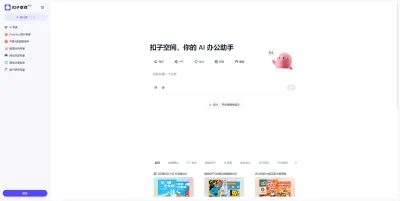

扣子-AI办公
职场AI,就用扣子
AI办公助手,复杂任务高效处理。办公效率低?扣子空间AI助手支持播客生成、PPT制作、网页开发及报告写作,覆盖科研、商业、舆情等领域的专家Agent 7x24小时响应,生活工作无缝切换,提升50%效率!


堆友
多风格AI绘画神器
堆友平台由阿里巴巴设计团队创建,作为一款AI驱动的设计工具,专为设计师提供一站式增长服务。功能覆盖海量3D素材、AI绘画、实时渲染以及专业抠图,显著提升设计品质和效率。平台不仅提供工具,还是一个促进创意交流和个人发展的空间,界面友好,适合所有级别的设计师和创意工作者。


码上飞
零代码AI应用开发平台
零代码AI应用开发平台,用户只需一句话简单描述需求,AI能自动生成小程序、APP或H5网页应用,无需编写代码。
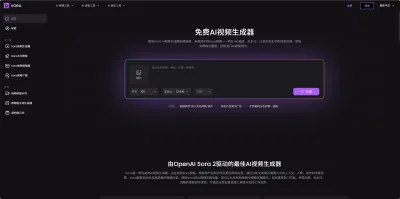

Vora
免费创建高清无水印Sora视频
Vora是一个免费创建高清无水印Sora视频的AI工具


Refly.AI
最适合小白的AI自动化工作流平台
无需编码,轻松生成可复用、可变现的AI自动化工作流


酷表ChatExcel
大模型驱动的Excel数据处理工具
基于大模型交互的表格处理系统,允许用户通过对话方式完成数据整理和可视化分析。系统采用机器学习算法解析用户指令,自动执行排序、公式计算和数据透视等操作,支持多种文件格式导入导出。数据处理响应速度保持在0.8秒以内,支持超过100万行数据的即时分析。

TRAE编程
AI辅助编程,代码自动修复
Trae是一种自适应的集成开发环境(IDE),通过自动化和多元协作改变开发流程。利用Trae,团队能够更快速、精确地编写和部署代码,从而提高编程效率和项目交付速度。Trae具备上下文感知和代码自动完成功能,是提升开发效率的理想工具。
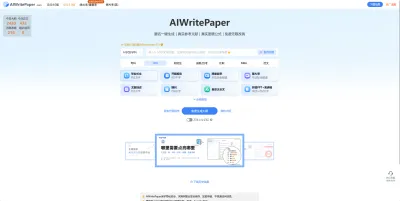

AIWritePaper论文写作
AI论文写作指导平台
AIWritePaper论文写作是一站式AI论文写作辅助工具,简化了选题、文献检索至论文撰写的整个过程。通过简单设定,平台可快速生成高质量论文大纲和全文,配合图表、参考文献等一应俱全,同时提供开题报告和答辩PPT等增值服务,保障数据安全,有效提升写作效率和论文质量。
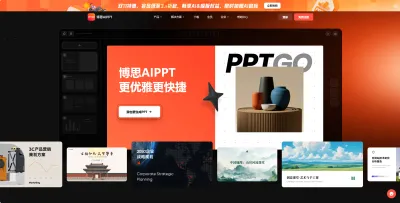

博思AIPPT
AI一键生成PPT,就用博思AIPPT!
博思AIPPT,新一代的AI生成PPT平台,支持智能生成PPT、AI美化PPT、文本&链接生成PPT、导入Word/PDF/Markdown文档生成PPT等,内置海量精美PPT模板,涵盖商务、教育、科技等不同风格,同时针对每个页面提供多种版式,一键自适应切换,完美适配各种办公场景。


潮际好麦
AI赋能电商视觉革命,一站式智能商拍平台
潮际好麦深耕服装行业,是国内AI试衣效果最好的软件。使用先进AIGC能力为电商卖家批量提供优质的、低成本的商拍图。合作品牌有Shein、Lazada、安踏、百丽等65个国内外头部品牌,以及国内10万+淘宝、天猫、京东等主流平台的品牌商家,为卖家节省将近85%的出图成本,提升约3倍出图效率,让品牌能够快速上架。

推荐工具精选


AI云服务特惠
懂AI专属折扣关注微信公众号
最新AI工具、AI资讯
独家AI资源、AI项目落地

微信扫一扫关注公众号