


mathpix-markdown-it



What is Mathpix Markdown?
mathpix-markdown is a superset of Markdown that adds helpful syntax for the STEM community, such as advanced equation, table, and chemistry support. Wherever possible, we borrow syntax from LaTeX. In other cases (such as chemistry) we invent new syntax that is backward compatible with Markdown.
Here are the key benefits over plain Markdown:
- better equation support via LaTeX syntax (powered by MathJax), including equation numbering and referencing conventions from LaTeX
- better support for tables, via the LaTeX tabular syntax, which allows for complex, nested tables often seen in scientific publications
- advanced figure referencing via LaTeX syntax
- support for abstracts, author lists, and linkable sections; these are a fact of life for academic publications
- support for chemistry diagrams represented with SMILES markup, compatible with popular chemistry tools like Chemdraw

Mathpix Markdown Syntax reference
Click here for the full syntax reference.
How to edit mmd files?
Mathpix Markdown is an open format with multiple implementations:
- you can use this Github repo and the
mathpix-markdown-itnpm library to render STEM content on your website - you can use the VS Code plugin (see picture above) to edit mmd files
- use can use our web editor Snip Notes to edit, export, and publish mmd files (with exports to pdf and docx formats)
- you can use our experimental static site generator Spectra to edit local mmd files and see changes in real time
How is Mathpix Markdown different from regular Markdown?
Mathpix Markdown addresses these limitations by adding support for the following standard Latex syntax elements which are already familiar to the scientific community:
- inline math via
\( <latex math> \) - block math via
\[ <latex math> \]or$$ <math> $$ - tables via
\begin{tabular} ... \end{tabular} - figures and figure captions via
\begin{figure} \caption{...} ... \end{figure} - lists: unordered lists via
\begin{itemize} ... \end{itemize}and ordered lists via\begin{enumerate} ... \end{enumerate} - numbered and unnumbered equation enviornments
\begin{elem} ... \end{elem}and\begin{elem*} ... \end{elem*}where elem=equation|align|split|gather - equation, table, and figure references via
\label,\ref,\eqref,\tag - text formatting options
\title{...},\author{...},\begin{abstract}...\end{abstract},\section{Section Title},\subsection{Section Title},\subsubsection{Section Title},\textit{italicized text},\textbf{bold text},\url{link} - chemistry equation via
<smiles>OC(=O)c1cc(Cl)cs1</smiles>or
```smiles
OC(=O)c1cc(Cl)cs1
```
- images (Markdown). Parse and render additional parameters such as width, height, alignment:
{ width=50% }
{ width="36px" }
{width="20px",height="20px"}
{width="20px",height="20px",right}
{width="20px",height="20px", align="left"}

\newtheorem{theorem}{Theorem}
\newtheorem{lemma}[theorem]{Lemma}

\begin{theorem}
Let \(f\) be a function whose derivative exists in every point, then \(f\)
is a continuous function.
\end{theorem}

\begin{lemma}
Given two line segments whose lengths are \(a\) and \(b\) respectively there
is a real number \(r\) such that \(b=ra\).
\end{lemma}

\begin{proof}
To prove it by contradiction try and assume that the statement is false,
proceed from there and at some point you will arrive to a contradiction.
\end{proof}

Footnote marker without text. Auto increment counter to 1 \footnotemark{} should be 1.

Footnote marker with text. Auto increment counter to 2 \footnotemark{} be 2. \footnotetext{text should be 2}

Auto increment counter to 3 \footnote{text  should be 3}

Auto increment counter to 4 \footnote{text  should be 4}

Footnote marker without text. Auto increment counter to 5 \footnotemark{} should be 5.

Footnote marker with text. Auto increment counter to 6 \footnotemark{} should be 6. \footnotetext{text should be 6}

Auto increment counter to 7 \footnote{text  should be 7}

Auto increment counter to 8 \footnote{text  should be 8}

Underline text: \underline{Underlined text!}
Underline text: \uline{Underlined text!}

Double underline text: \underline{\underline{Double underlined text!}}
Double underline text: \uuline{Double underlined text!}

Wavy underlined text: \uwave{This text is underlined with a wavy line!}

Dashed underline text: \dashuline{Dashed Underline}
Dotted underline text: \dotuline{Dotted Underline}

Strikethrough text: \sout{Text with a horizontal line through its center!}
Struck with Hatching text: \xout{Text with hatching pattern!}

What is mathpix-markdown-it?
mathpix-markdown-it is an open source implementation of the mathpix-markdown spec written in Typescript.
It relies on the following open source libraries:
- MathJax v3 (to render math with SVGs)
- markdown-it (for standard Markdown parsing)
Quickstart
Installation
npm usage:
$ npm install mathpix-markdown-it
yarn usage:
$ yarn add mathpix-markdown-it
How to use
React usage
mathpix-markdown-it components usage
We provide React components which make rendering of mathpix-markdown-it easy for React applications: Full example
import {MathpixMarkdown, MathpixLoader} from 'mathpix-markdown-it';


class App extends Component {
  render() {
    return (
      <MathpixLoader>
          <MathpixMarkdown text="\\(ax^2 + bx + c = 0\\)"/>
          <MathpixMarkdown text="$x = \frac { - b \pm \sqrt { b ^ { 2 } - 4 a c } } { 2 a }$"/>
          ...
      </MathpixLoader>
    );
  }
}
MathpixMarkdownModel methods usage
Example of render() method usage
import * as React from 'react';
import { MathpixMarkdownModel as MM } from 'mathpix-markdown-it';

class App extends React.Component {
  componentDidMount() {
    const elStyle = document.getElementById('Mathpix-styles');
    if (!elStyle) {
      const style = document.createElement("style");
      style.setAttribute("id", "Mathpix-styles");
      style.innerHTML = MM.getMathpixFontsStyle() + MM.getMathpixStyle(true);
      document.head.appendChild(style);
    }
  }
  render() {
    const html = MM.render('$x = \\frac { - b \\pm \\sqrt { b ^ { 2 } - 4 a c } } { 2 a }$');
    return (
      <div className="App">
        <div className="content" dangerouslySetInnerHTML={{__html: html}}></div>
      </div>
    )
  }
}

export default App;
Example of markdownToHTML() method usage
class ConvertForm extends React.Component {
  constructor(props) {
    super(props);
    this.state = {
      value: '\\[\n' +
        'y = \\frac { \\sum _ { i } w _ { i } y _ { i } } { \\sum _ { i } w _ { i } } , i = 1,2 \\ldots k\n' +
        '\\]',
      result: ''
    };

    this.handleChange = this.handleChange.bind(this);
    this.handleSubmit = this.handleSubmit.bind(this);
  }

  handleChange(event) {
    this.setState({value: event.target.value});
  }

  handleSubmit(event) {
    event.preventDefault();
    this.setState({result: MM.markdownToHTML(this.state.value)})
  }

  render() {
    return (
      <div>
        <form onSubmit={this.handleSubmit}>
          <h1>Input Text with Latex:</h1>
          <textarea value={this.state.value} onChange={this.handleChange} />
          <input type="submit" value="Convert" />
        </form>
        <div id='preview-content' dangerouslySetInnerHTML={{__html: this.state.result}}/>
      </div>
    );
  }
}
Latex to mathml/asciimath/tsv conversion
Example of Latex to mathml/asciimath/tsv conversion
Rendering methods have the ability to convert Latex representation to such formats as: mathml, asciimath, tsv
const options = {
      outMath: { //You can set which formats should be included into html result
        include_mathml: true,
        include_asciimath: true,
        include_latex: true,
        include_svg: true, // sets in default
        include_tsv: true,
        include_table_html: true, // sets in default
      }
    };
const html = MathpixMarkdownModel.markdownToHTML(`$x^x$`, options);
markdownToHTML() returns an HTML string that will contain the formats specified in the options.
For Latex formulas, the result will be:
<span class="math-inline">
    <mathml style="display: none">...</mathml>
    <asciimath style="display: none">...</asciimath>
    <latex style="display: none">...</latex>
    <mjx-comtainer class="MathJax" jax="SVG">..</mjx-comtainer>
</span>
For tabular, the result will be:
<div class="table_ tabular">
    <table id="tabular">...</table>
    <tsv style="display: none">...</tsv>
</div>
Then calling the parseMarkdownByHTML(html) method will return all formats as a list from the incoming html string.
For Latex formulas:
[
    {
      "type": "mathml",
      "value": "<math>...</math>"
    },
    {
       "type": "asciimath",
       "value": "x^(x)"
     },
    {
       "type": "latex",
       "value": "x^x"
     },
    {
       "type": "svg",
       "value": "<sgv>...</svg>"
     }
]
For tabular:
[
    {
      "type": "html",
      "value": "<table>...</table>"
    },
    {
       "type": "tsv",
       "value": "<tsv>...</tsv>"
     }
]
Example of outMath option usage
For Latex formulas:
const options = {
      outMath: {
        include_mathml: false,
        include_asciimath: true,
        include_latex: false,
      }
    };
const latex = `$x^x$`;
const html = MathpixMarkdownModel.markdownToHTML(latex, options);
const parsed = MathpixMarkdownModel.parseMarkdownByHTML(html, false);
html:
<div>
    <span class="math-inline">
        <asciimath style="display: none;">x^(x)</asciimath>
        <mjx-comtainer class="MathJax" jax="SVG"><svg>...</svg></mjx-comtainer>
    </span>
</div>
parsed:
[
    {
       "type": "asciimath",
       "value": "x^(x)"
     },
    {
       "type": "svg",
       "value": "<sgv>...</svg>"
     }
]
For tabular:
const options = {
      outMath: {
        include_table_html: false,
        include_tsv: true,
      }
    };
const latex = `\\begin{tabular}{ l c r }
  1 & 2 & 3 \\\\
  4 & 5 & 6 \\\\
  7 & 8 & 9 \\\\
\\end{tabular}`;
const html = MathpixMarkdownModel.markdownToHTML(latex, options);
const parsed = MathpixMarkdownModel.parseMarkdownByHTML(html, false);
<div class="table_tabular " style="text-align: center">
  <tsv style="display: none">1    2       3
4       5       6
7       8       9</tsv>
</div>
parsed:
[
  {
    type: 'tsv',
    value: '1\t2\t3\n4\t5\t6\n7\t8\t9'
  }
]
Example of the include_sub_math option usage for tables containing nested tables and formulas
parseMarkdownByHTML(html: string, include_sub_math: boolean = true)
By default, the include_sub_math option is enabled, and as a result will contain formats for the nested table and math.
const options = {
    outMath: {
        include_asciimath: true,
        include_mathml: true,
        include_latex: true,
        include_svg: true,
        include_tsv: true,
        include_table_html: true
    }
  };
const latex = `\\begin{tabular}{ l c r }
                 1 & {$x^1$} & 3 \\\\
                 4 & {$y^1$} & 6 \\\\
                 7 & {$z^1$} & 9 \\\\
               \\end{tabular}`;
const html = MathpixMarkdownModel.markdownToHTML(latex, options);
const parsed = MathpixMarkdownModel.parseMarkdownByHTML(html);
parsed:
[
  {
    type: 'html',
    value: '<table>..</table>'
  },
  { type: 'tsv', value: '1\tx^(1)\t3\n4\ty^(1)\t6\n7\tz^(1)\t9' },

  { type: 'mathml', value: '<math xmlns="http://www.w3.org/1998/Math/MathML">\n  <msup>\n    <mi>x</mi>\n    <mn>1</mn>\n  </msup>\n</math>' },
  { type: 'asciimath', value: 'x^(1)' },
  { type: 'latex', value: 'x^1' },
  { type: 'svg', value: '<svg >..</svg>' },

  { type: 'mathml', value: '<math xmlns="http://www.w3.org/1998/Math/MathML">\n  <msup>\n    <mi>y</mi>\n    <mn>1</mn>\n  </msup>\n</math>' },
  { type: 'asciimath', value: 'y^(1)' },
  { type: 'latex', value: 'y^1' },
  { type: 'svg', value: '<svg ></svg>' },

  { type: 'mathml', value: '<math xmlns="http://www.w3.org/1998/Math/MathML">\n  <msup>\n    <mi>z</mi>\n    <mn>1</mn>\n  </msup>\n</math>' },
  { type: 'asciimath', value: 'z^(1)' },
  { type: 'latex', value: 'z^1' },
  { type: 'svg', value: '<svg
编辑推荐精选


扣子-AI办公
职场AI,就用扣子
AI办公助手,复杂任务高效处理。办公效率低?扣子空间AI助手支持播客生成、PPT制作、网页开发及报告写作,覆盖科研、商业、舆情等领域的专家Agent 7x24小时响应,生活工作无缝切换,提升50%效率!


堆友
多风格AI绘画神器
堆友平台由阿里巴巴设计团队创建,作为一款AI驱动的设计工具,专为设计师提供一站式增长服务。功能覆盖海量3D素材、AI绘画、实时渲染以及专业抠图,显著提升设计品质和效率。平台不仅提供工具,还是一个促进创意交流和个人发展的空间,界面友好,适合所有级别的设计师和创意工作者。


码上飞
零代码AI应用开发平台
零代码AI应用开发平台,用户只需一句话简单描述需求,AI能自动生成小程序、APP或H5网页应用,无需编写代码。
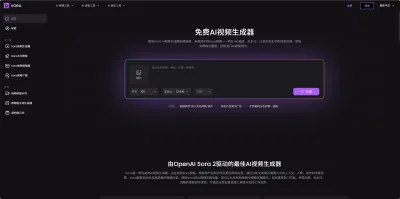

Vora
免费创建高清无水印Sora视频
Vora是一个免费创建高清无水印Sora视频的AI工具


Refly.AI
最适合小白的AI自动化工作流平台
无需编码,轻松生成可复用、可变现的AI自动化工作流


酷表ChatExcel
大模型驱动的Excel数据处理工具
基于大模型交互的表格处理系统,允许用户通过对话方式完成数据整理和可视化分析。系统采用机器学习算法解析用户指令,自动执行排序、公式计算和数据透视等操作,支持多种文件格式导入导出。数据处理响应速度保持在0.8秒以内,支持超过100万行数据的即时分析。


TRAE编程
AI辅助编程,代码自动修复
Trae是一种自适应的集成开发环境(IDE),通过自动化和多元协作改变开发流程。利用Trae,团队能够更快速、精确地编写和部署代码,从而提高编程效率和项目交付速度。Trae具备上下文感知和代码自动完成功能,是提升开发效率的理想工具。
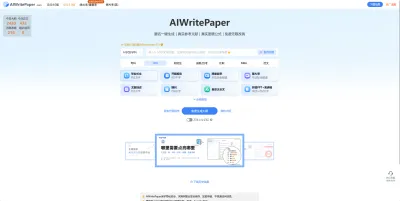

AIWritePaper论文写作
AI论文写作指导平台
AIWritePaper论文写作是一站式AI论文写作辅助工具,简化了选题、文献检索至论文撰写的整个过程。通过简单设定,平台可快速生成高质量论文大纲和全文,配合图表、参考文献等一应俱全,同时提供开题报告和答辩PPT等增值服务,保障数据安全,有效提升写作效率和论文质量。


博思AIPPT
AI一键生成PPT,就用博思AIPPT!
博思AIPPT,新一代的AI生成PPT平台,支持智能生成PPT、AI美化PPT、文本&链接生成PPT、导入Word/PDF/Markdown文档生成PPT等,内置海量精美PPT模板,涵盖商务、教育、科技等不同风格,同时针对每个页面提供多种版式,一键自适应切换,完美适配各种办公场景。


潮际好麦
AI赋能电商视觉革命,一站式智能商拍平台
潮际好麦深耕服装行业,是国内AI试衣效果最好的软件。使用先进AIGC能力为电商卖家批量提供优质的、低成本的商拍图。合作品牌有Shein、Lazada、安踏、百丽等65个国内外头部品牌,以及国内10万+淘宝、天猫、京东等主流平台的品牌商家,为卖家节省将近85%的出图成本,提升约3倍出图效率,让品牌能够快速上架。

推荐工具精选


AI云服务特惠
懂AI专属折扣关注微信公众号
最新AI工具、AI资讯
独家AI资源、AI项目落地

微信扫一扫关注公众号